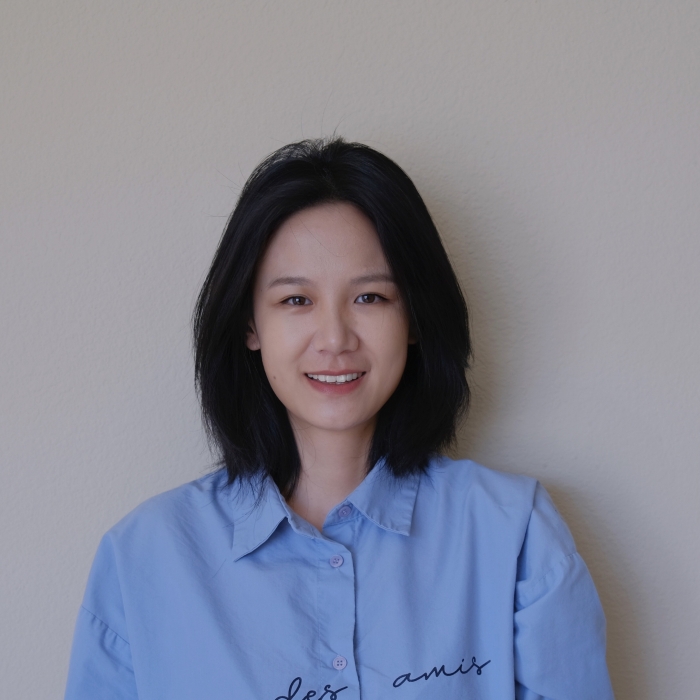
Dr. Jun Zhang
Assistant Professor
Spring 2026
M/W: 9:00 am to 10:00 am, Tuesday: 9:00 am to 12:30 pm and by appointment. In person/Zoom.
Departments / Programs
Degree Information
- PHD, Syracuse University (2021)
- MPA, Syracuse University (2013)
- BA, Zhejiang Gongshang University (2012)
Biography
Jun Zhang (Ph.D. Syracuse University) is an Assistant Professor in the School of Journalism and Strategic Media at Middle Tennessee State University. She teaches courses in public relations, social media, and research methods. Her research focuses on crisis spillover effects, CSR/CSA legitimacy, organizational adoption of innovative technologies, and health misinformation. Her work has been published in leading academic journals, includ...
Read More »Jun Zhang (Ph.D. Syracuse University) is an Assistant Professor in the School of Journalism and Strategic Media at Middle Tennessee State University. She teaches courses in public relations, social media, and research methods. Her research focuses on crisis spillover effects, CSR/CSA legitimacy, organizational adoption of innovative technologies, and health misinformation. Her work has been published in leading academic journals, including Public Relations Review, Asian Journal of Communication, Computers in Human Behavior, Journal of Broadcasting and Electronic Media, Health Communication, and Journal of Brand Management, among others. She also regularly presents papers at the annual conferences of the Association for Education in Journalism and Mass Communication (AEJMC) and the International Communication Association (ICA). She serves as the co-director of the Social Media Insights Lab at MTSU.
Zhang earned her doctorate in mass communications in 2021 from the Newhouse School of Syracuse University. At Newhouse, Zhang taught courses about social media and quantitative research methods.
Previously, Zhang was a research analyst at the Center for Social Media Research at Peking University, China. She served as the key member of the Social Media Impact Measurement Project funded by the Bill & Melinda Gates Foundation and the lead project manager for the social listening projects for Campaign for Tobacco-Free Kids and the International Organization for Migration.
Publications
Peer-Reviewed Journals
[20] Zhang, J., & Park, K. (2026). Proactive or reactive CSR? How timing and CSR-crisis fit shape employees’ moral emotions and forgiveness. International Journal of Strategic Communication. Advance online publication.
[19] Narrell, J., & Zhang, J. (2026). “kamala IS brat”: How online campaign content s...
Read More »Peer-Reviewed Journals
[20] Zhang, J., & Park, K. (2026). Proactive or reactive CSR? How timing and CSR-crisis fit shape employees’ moral emotions and forgiveness. International Journal of Strategic Communication. Advance online publication.
[19] Narrell, J., & Zhang, J. (2026). “kamala IS brat”: How online campaign content shapes young adults’ political organization-public relationships and participation. Public Relations Review, 52(2), 102679. (coauthored with master’s student mentee)
[18] Lim, J. S., Zhang, J., & Ren, B. (2026). Partisan responses to cancel culture on social media: Hostile media effects on political behavior. Online Information Review, 50(1), 57–76.
[17] Zhang, J., Chen, L., & Xu, D. (2025). Social media influencers as CSR advocates: The role of credibility, normative legitimacy, and public-serving motives. Social Science Computer Review. Advance online publication.
[16] Lim, J. S., & Zhang, J. (2025). Stakeholder engagement and authenticity in corporate social advocacy: Pathways to corporate reputation via perceived legitimacy. Journal of Public Relations Research, 37(5), 470–497.
[15] Xu, D., Zhang, J., & Chen, L. (2025). The parasocial synergy: Decoding the hypocrisy reduction impact of social media influencer partnerships in corporate social responsibility communication. International Journal of Business Communication. Advance online publication.
[14] Lim, J. S., Lee, C., Shin, D., Kim, J., & Zhang, J. (2025). Perceived stakeholder engagement in corporate data responsibility (CDR) communication and its relationship with trust in generative AI systems: The mediating role of algorithmic and institutional responsibility. Journal of Public Relations Research, 37(5), 447–469.
[13] Lim, J. S., Shin, D., Lee, C., Kim, J., & Zhang, J. (2025). The role of user empowerment, AI hallucination, and privacy concerns in continued use and premium subscription intentions: An extended technology acceptance model for generative AI. Journal of Broadcasting & Electronic Media, 69(3), 183–199.
[12] Lim, J. S., Schneider, E., Tsyruleva, M., Zhang, J., & Peters, D. (2025). Effects of AI versus human source attribution on trust and forgiveness in the identical corporate apology statement for a data breach scandal. Public Relations Review, 51(1), 102520.
[11] Lim, J. S., Lee, C., Kim, J., & Zhang, J. (2025). Influence of COVID-19 vaccine misinformation beliefs on the third-person effect: Implications for social media content moderation and corrective action. Online Information Review, 49(3), 497–516.
[10] Zhang, J., Xu, D., & Chen, L. (2024). Enhancing supportive intention through perceived legitimacy: Social media influencer leadership and charismatic legitimization in CSR communication. Public Relations Review, 50(5), 102511.
[9] Zhang, J., & Lim, J. S. (2024). Efficacy of response strategies in brand spillover crises: The roles of perceived attribute similarity, blame attribution, and attitude toward response messages. Journal of Contingencies and Crisis Management, 32(1), e12548.
[8] Lim, J. S., Zhang, J., Kim, J., & Lee, C. (2024). Understanding PM2.5 risk information seeking and processing among South Koreans: Evidence of desensitization? Asian Journal of Communication, 34(5), 560–579.
[7] Lim, J. S., Zhang, J., Kim, J., & Lee, C. (2024). Support for censorship and corrective actions against social media misinformation about COVID-19 vaccines: Comparisons across age, gender, and racial/ethnic groups. Health and New Media Research, 8(2), 12–21.
[6] Lim, J. S., Shin, D., Zhang, J., Masiclat, S., Luttrell, R., & Kinsey, D. (2023). News audiences in the age of artificial intelligence: Perceptions and behaviors of optimizers, mainstreamers, and skeptics. Journal of Broadcasting & Electronic Media, 67(3), 353–375.
[5] Lim, J. S., & Zhang, J. (2023). Cognitive and affective routes to the adoption of protective behaviors against health risks of PM2.5 in China. Health Communication, 38(10), 2235–2246.
[4] Lim, J. S., & Zhang, J. (2022). Adoption of AI-driven personalization in digital news platforms: An integrative model of technology acceptance and perceived contingency. Technology in Society, 69, 101965.
[3] Zhang, J., & Lim, J. S. (2021). Mitigating negative spillover effects in a product-harm crisis: Strategies for market leaders versus market challengers. Journal of Brand Management, 28, 77–98.
[2] Lim, J. S., & Zhang, J. (2021). The impact of message appraisals of Dove’s Campaign for Real Beauty on information seeking and electronic word-of-mouth intentions of US female consumers. Telematics and Informatics, 61, 101594.
[1] Lim, J. S., Choi, M., Zhang, J., & Noh, G. (2020). The role of wishful identification, emotional engagement, and parasocial relationships in repeated viewing of live-streaming games: A social cognitive theory perspective. Computers in Human Behavior, 108, 106327.
Courses
JOUR/RIM/EMC1020 (Honors) Introduction to Media and Entertainment
JOUR3070 Introduction to Social Media Practice
JOUR3170 Digital Analytics & Certification
JOUR3660 Strategic Communication Research
JOUR3841 Data Skills for Media Professionals
PR4720 Crisis Communication in Public Relations
ADV3020 Principle of Advertising (Online)
ADV4250 Interactive Advertising and Social Media
MC6280 Public Relations Theory
MC6500 Public Relations Research